The operations are reasonable alternatives with different benefits, risks and long-term demands. Eating patterns help frame the conversation, but they do not determine the operation by themselves. Endoscopy, reflux evaluation, nutritional testing and prior operative records may change the plan. Our informed-decision process gives you time to understand the alternatives.
Sleeve gastrectomy
Sleeve reduces stomach capacity while preserving the pylorus. It may suit someone whose excess intake is concentrated in meals, provided the reflux and medical evaluation support it. Frequent snacks, soft calorie-dense foods and sweet drinks can undermine the effect of a smaller stomach.
Dr. Elariny’s teaching and instruction materials describe approximately 2-ounce meals for an unbanded sleeve and smaller meals for a banded sleeve. These are practice teaching examples: actual portions, texture and timing depend on healing, tolerance and your prescribed nutrition plan. They are not permission to advance your diet.
A sleeve can cause or worsen reflux. Barrett’s esophagus, significant esophagitis or difficult-to-control GERD make the choice especially important and often favor discussing Roux-en-Y gastric bypass. A sleeve can also be considered as the first stage of a planned operation when reducing operative burden is a priority; that plan includes the possibility of another operation.
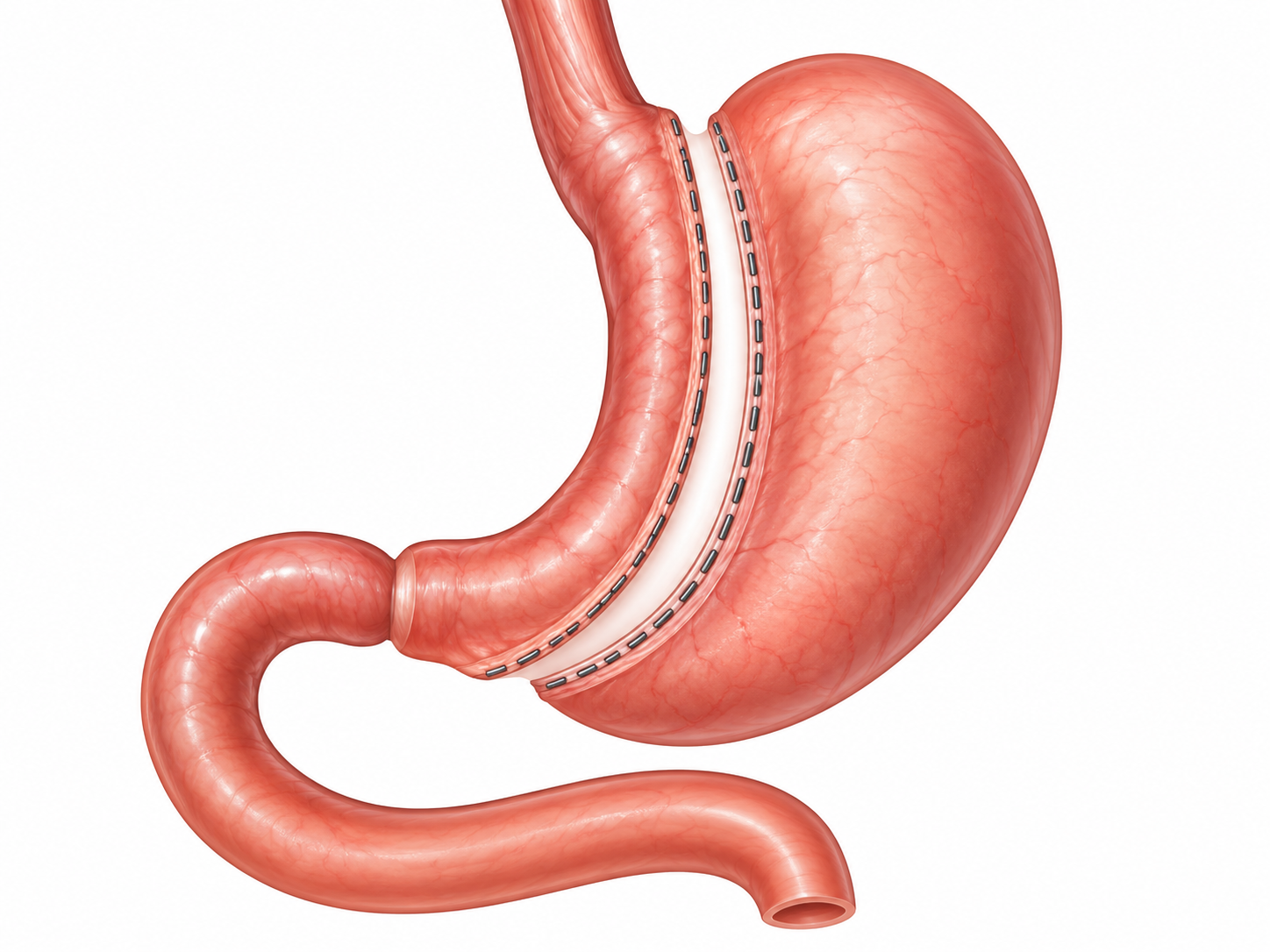
What an upper GI contrast study can show
A UGI study helps assess the shape and passage of contrast through the sleeve: retained fundus, a widened segment, narrowing, twisting, hiatal hernia and delayed passage can all inform evaluation. The intended sleeve has a relatively uniform passage without a significant obstructing narrowing or twist.
Dr. Elariny emphasizes avoiding an excessively capacious distal antrum that functions as a food reservoir. A broad distal pool may prompt closer assessment, but antral preservation varies by technique. Size alone does not establish technical failure or explain reflux. Symptoms, endoscopy, operative details and contrast passage must be interpreted together. A UGI appearance is not a stand-alone test of surgical quality.
Antral technique research: Randomized multicenter study of antral resection versus preservation.
Banded sleeve
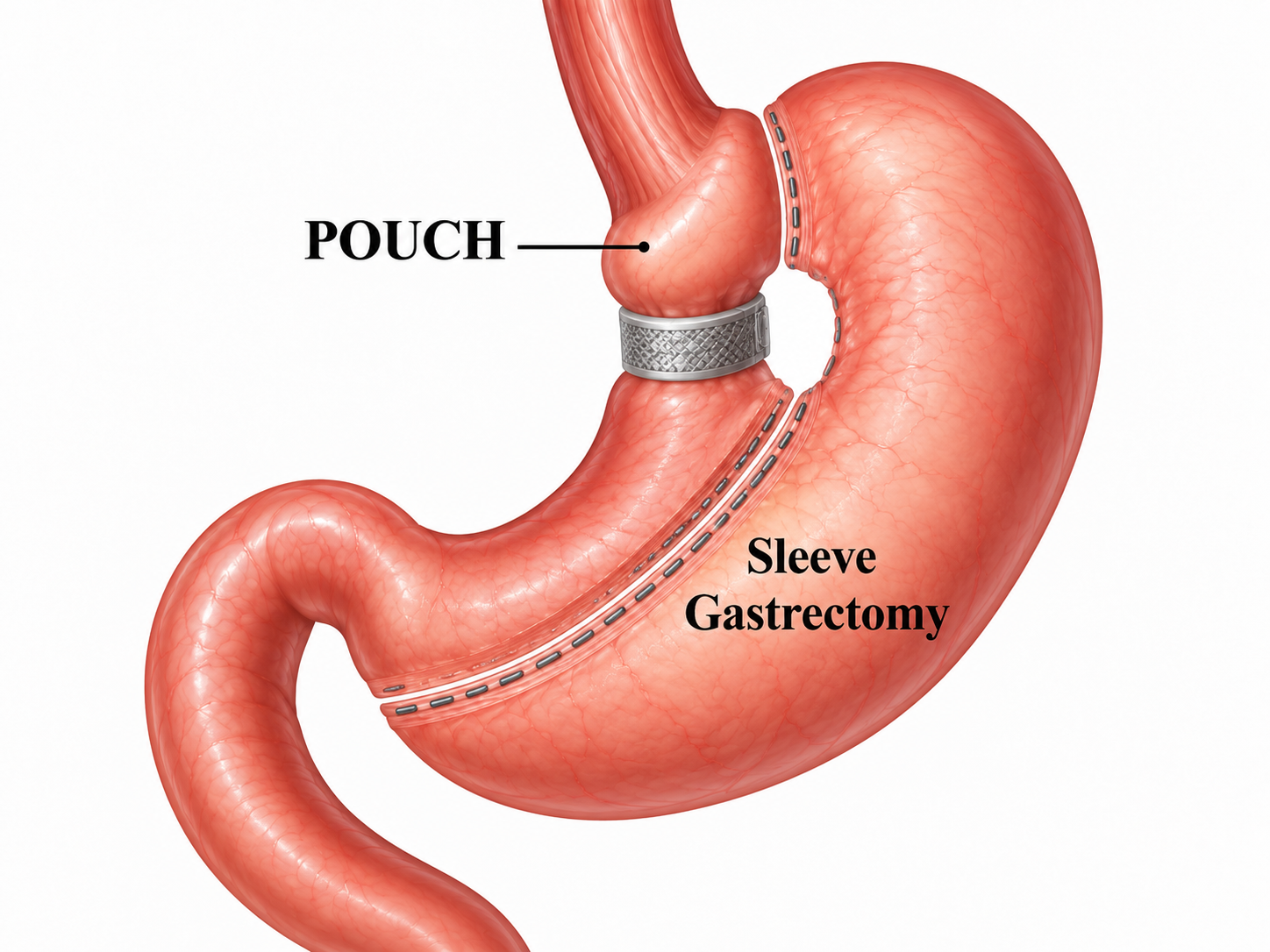
A band adds a fixed restriction to the sleeve. The practice’s teaching example is approximately a 1-ounce meal, with a slower progression of textures than after an unbanded sleeve. The ability to chew thoroughly, eat slowly and meet protein needs with small portions matters. A banded sleeve is different from an adjustable gastric band placed around an otherwise intact stomach.
The trade-offs include food intolerance, vomiting, narrowing and possible band removal or revision. Reflux remains a concern. On imaging, the team considers the pouch above the band, passage through the band and the sleeve below it.
Roux-en-Y gastric bypass
Bypass deserves particular consideration when obesity coexists with significant GERD or Barrett’s esophagus. It often improves reflux, but does not guarantee symptom resolution or remove the need for Barrett’s surveillance. Anatomy, biopsy results and other testing guide the recommendation.
Sweet intake and willingness to avoid concentrated sugars are discussed alongside dumping symptoms and possible post-meal low blood sugar. Dumping is a potential adverse effect, not a treatment goal. Grazing can still limit weight loss. Supplements and follow-up address iron, B12, calcium and other deficiencies; tobacco and NSAID exposure also matter because of ulcer risk.
Biliopancreatic diversion with duodenal switch
BPD-DS combines a sleeve with substantial intestinal bypass. Planning weighs the desired metabolic and weight effect against the ability to maintain protein intake, fat-soluble vitamins and lifelong laboratory monitoring. Frequent eating does not make DS an automatic choice or eliminate the need for dietary changes.
Discuss tolerance for loose or oily stools (steatorrhea), gas, supplement costs and nutritional risk. Existing deficiencies, liver disease and inflammatory bowel disease require particular attention. DS retains a sleeve and is not selected as a treatment for GERD or Barrett’s. Reflux may develop or worsen.
For someone at high operative risk, a staged approach may be considered. There is no single BMI rule that determines staging: cardiopulmonary health, reflux, anatomy, nutritional status and willingness to undergo another procedure all matter. SADI-S and two-anastomosis DS are different reconstructions.
Revisional surgery
The team first establishes the existing anatomy and the reason for revision: symptoms, weight recurrence, inadequate loss or a nutritional complication. Prior limb lengths, remaining bowel, medication-related weight changes and protein status can be critical. Adding malabsorption may be inappropriate in a person already struggling with nutrition.
Endoscopic or restrictive revisions can have selected roles; their limitations should be explained rather than assuming that every recurrence has the same cause. See the full range of revisional procedures.
Factors that apply across procedures
- Reflux, swallowing difficulty, hiatal hernia and prior abdominal operations.
- Diabetes, sleep apnea, heart or lung disease, clotting history and current medicines.
- Food preferences, meal quality, sweets, grazing and liquid calories.
- Ability to obtain and take protein supplements and vitamins and attend follow-up.
- Risk tolerance, dumping and bowel-effect tolerance, and willingness to consider staged surgery.
- Pregnancy plans, support at home and any deficiencies that need treatment before surgery.
Use Preparation and After surgery for practical next steps.
Further reading: ASMBS: bariatric surgery procedures. Procedure selection and follow-up are individualized.
Reflux guidance: Multi-society GERD guideline.